


Can You Have a Master Key for All Locks in Your Building? Exploring the Pros and Cons
Carrying a different key for every door in your building gets old fast. If you manage an office, a block of units or a warehouse, a ring of keys that never seems to include the right one often only wastes time and creates risk.
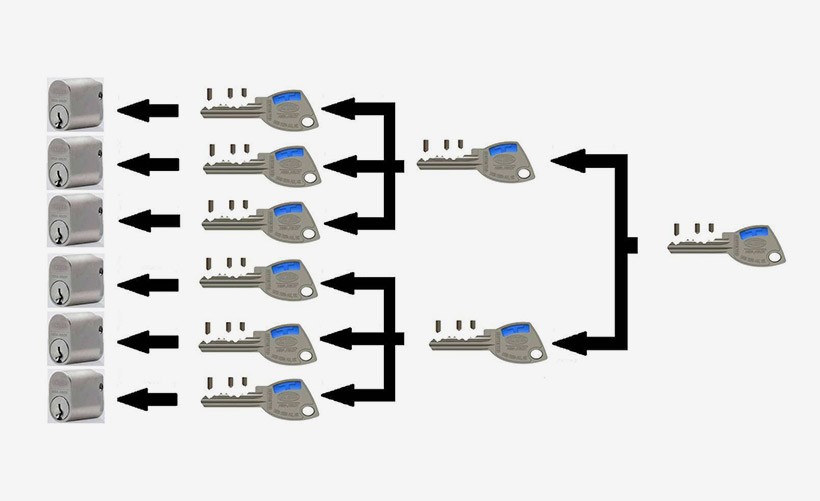
So, can you have a master key for all the locks in your building? Yes, and that’s exactly what a master key lock system is designed to do. One key opens every lock in the system, while individual keys open only their own doors.
But this approach isn’t the right fit for every property. This guide covers the pros and cons, so you can decide if master key systems in Melbourne are worth it for your building.
What Is a Master Key Lock System?
A master key lock system allows multiple unique keys to open their own specific locks, while a master key can open all the locks within the same lock system.
In practice, the system works as a hierarchy. Each tenant, employee or room gets a key that opens only their own door. Someone with wider responsibility, such as a building manager or caretaker, holds a master key that opens every door in the system. In larger buildings, the system can have extra levels. One key might open all the doors on one floor or in one department, while a grand master key opens everything.
These systems suit any property where many people need access to their own space but one person needs access to all of them. Office buildings, apartment complexes, schools, medical centres, warehouses and retail centres are common examples. This kind of system is usually designed and installed by a locksmith, as it’s planned around the whole building from the start rather than added lock by lock.
So how can one key open so many different locks? That comes down to how the locks themselves are built.
How a Master Key System Works
Standard locks use a pin tumbler mechanism. A master key lock system adds extra metal pieces, called master pins, master wafers or spacers, to the pin stacks. These extra wafers create more than one valid alignment point inside the lock cylinder. This means different key cuts can turn the locking mechanism and open the door.
The Pros of a Master Key System
There are many advantages to such a system for your workplace, commercial hub or warehouse facility. Most notably, these are:
- Enhanced Security: You can limit access to sensitive areas such as computer server rooms or private offices, while giving trusted managers or owners full entry.
- Convenience and Fewer Keys: You can avoid carrying heavy, bulky keyrings by using a single set for all doors.
- Customisable Hierarchy: You can structure access across multiple tiers. You can have change keys for individual staff, master keys for department heads, and a grand master key for the owner.
- Restricted Key Option: A system can be set up with restricted or patented key blanks, which hardware stores can’t copy without authorisation from your locksmith. That gives you control over who holds a key.
- Cost-Effective Maintenance: They are cheaper to set up and maintain than complex electronic key-card systems, and losing a standard change key usually means rekeying only that specific lock rather than the entire building.
- Scalability: You can easily expand the system as your business, office, or residential property grows and adds new rooms or tenants.
Common System Levels
- 2-Level System: Uses lower-level change keys, which open one specific door, and a single master key, which opens every door in the group.
- 3-Level System (Grand Master): Ties two or more 2-level systems together under a higher grand master key, alongside intermediate sub-master keys.
- 4-Level System (Great Grand Master): Adds a top-tier layer for massive commercial buildings, campuses, or multi-storey office complexes to manage heavy traffic flow.
The Cons and Security Risks of a Master Key System
Despite the obvious advantages of having such a lock system, there are a few disadvantages you should be aware of.
- High-Level Compromise (Single Point of Failure): If it is lost, stolen, or illegally duplicated, the security of every single lock tied to that system is compromised at once.
- Rights Amplification: These systems add master wafers or spacer pins into the pin stacks to create multiple shear lines. This structural weakness allows a single key to be reverse-engineered or manipulated with basic tools to grant total system access without leaving visible signs of tampering.
- Unauthorised Duplication: Without a restricted system, master keys and change keys can be copied at hardware stores. Previous employees, contractors or tenants can make copies covertly, and a copied version opens every door.
- Mechanical Weaknesses: Adding master wafers reduces the precision of pin stacks and can lead to mechanical flaws or wear if cuts vary too drastically across the key.
- Complex Administration: Managing, tracking, and auditing who holds which key requires strict record-keeping. Loose tracking such as pegboards or desk drawers drastically raises the odds of it going missing.
- High Replacement Costs: If a true master key is lost, you often have to rekey or replace a large portion of the locks across the entire property rather than just a single door.
Who Needs a Master Key System in Melbourne?

There are plenty of situations where a master key system is useful in Melbourne. This includes an owner of a property with multiple entry points and multiple areas of restricted access.
Warehouses and corporate office parks are perfect examples, where only a limited number of people should have full access.
- Commercial Office Parks: Buildings with multiple departments, private suites or different businesses under one roof need this system so security and cleaning staff can access all areas when needed.
- Strata Apartment Complexes: Residents need access to their own apartments and communal areas, while building managers may need access to all units.
- Shopping Complexes: Business managers and security staff need after-hours entry to storerooms.
- Schools and Universities: Lecturers need access to their rooms, while maintenance staff need access to more.
- Medical Practices: Places that need tight controls over who accesses medications and patient records would do well with a master key system.
- Warehouses and Industrial Sites: Staff need general entry to loading docks and storage rooms, with restricted access to offices or high-security areas.
How to Keep a Master Key System Secure
You need strict physical control over the set of keys, using practices such as signing keys out and back in, and restricting who is allowed to hold one.
Enforce Strict Physical Key Control
Secure high-level keys in an electronic safe that audits every transaction, and if you can, never let the key off-site. A master key leaving the site increases the chances it could be duplicated.
Maintain an accountability log of all keys that exist and who has access to them. Record each key holder’s name, contact details and the zones they’re allowed to access. if someone is somewhere they shouldn’t be you can discover this rapidly.
Prohibit unauthorised duplication by using restricted keyways with legally protected designs. This ensures that local hardware stores cannot copy the same set..
Design a Simpler, Safer System
Sometimes the simplest security is the best. Keep the hierarchy system as small as possible. A system of no more than three levels is easier to manage.
Avoid many master keys or master pins. The more master keys you have, the more logging you need to do of who holds what. There are also more channels of access and more opportunities to pick locks or steal keys.
Look at high-security hardware. The key isn’t the only thing that matters. Anti-pick or anti-bump cylinders are a good idea; Teflon-coated components can also help prevent mechanical failures.
Audit and Maintain the System Regularly
The best security system in the world can be hampered by lazy auditing and record-keeping. Have a strict security auditing routine. Check the physical key storage and logs and keep up to date on who is employed and who holds keys.
Also plan for the worst. What to do if a key is lost or a lock is broken. Understand the level of security risk, and implement a way to have the problem solved as quickly as possible.
Know What to do if a Key is Lost or a Lock is Broken
If you lose a master key, this is an immediate security breach and must be treated as such. It is not something you fix the next day. You investigate immediately and you assume the key will not be recovered.
Immediate Action Steps
- Contact a Professional Locksmith: Call a commercial locksmith, such as our team at RAM Locksmiths, immediately to evaluate the system.
- Assess the Scope: Identify every single lock, padlock, cabinet, or mailroom door the lost master key could open.
- Rekey or Replace Affected Locks: Because it opens multiple (or all) locks in a system, cutting a single replacement key is not enough. You must either rekey the existing cylinders or replace the hardware completely.
- Audit and Log Access: Review key control registers, account for all remaining copies, and communicate with staff, residents, or stakeholders about the replacement measures.
Secure Master Key Systems in Melbourne: Getting Started with Local Locksmiths
A master key system can make a building easier to manage and more secure, but only if it’s designed, installed and controlled properly. The right setup depends on your property, how many people need access and how much risk you’re comfortable with. A restricted system, strict key control and regular audits go a long way towards covering the downsides.
That’s where an experienced local locksmith makes the difference. RAM Locksmiths has been looking after Melbourne businesses since 1979, and our team designs and installs restricted master key systems for offices, schools, healthcare and retail sites. We’ll assess your building, recommend the right number of levels and make sure your keys can’t simply be copied at the local hardware store.
Our locksmiths in Keysborough, Officer and across Melbourne can design a master key lock system for your building. And if a master key goes missing, our 24/7 emergency locksmiths can reach you in Narre Warren, Glen Waverley and beyond.
In a jam? Ring RAM today. You can get in touch online or call 03 8784 3900 for a free quote.
Recent Blogs
-
 What Type of Lock Is Best for My Home? Deadbolts vs Knob Locks vs Smart Locks
The front door to your home creates the first impression for both you and your guests, but it’s also the first line of defence against unwanted intruders. Naturally, you’ll want to open the door to friends and keep it locked and secure from strangers. The question is; what type of lock works best? Should you […]
Read More -
 Licensed Locksmith vs Handyman: Who Should You Call for Lock Repairs and Security Upgrades?
The lock on your front door is the first line of defence keeping unwanted people out of your home. If it gets damaged in any way, or you want a new, more secure lock, who do you call? Your local handyman or a qualified locksmith? If there is an emergency, or you want to upgrade […]
Read More -
 Rekeying vs Replacing Locks: Which Option Is Better and Cheaper for Homeowners?
Lost your keys to your home or office? Does someone you no longer trust have access to the same or a similar set of keys? Locking your door won’t help as they would be able to get right in. You generally have two options when this happens. You can rekey your lock, or you can […]
Read More -
 How Often Should I Change My Door Locks? 10 Signs Your Locks Need Attention
The lock on your front door is a primary piece of security to your home, and only someone with a key may enter. However, as with anything that has moving parts, the lock on your front door can wear down and be less efficient in securing your home. Or, someone you no longer trust may […]
Read More